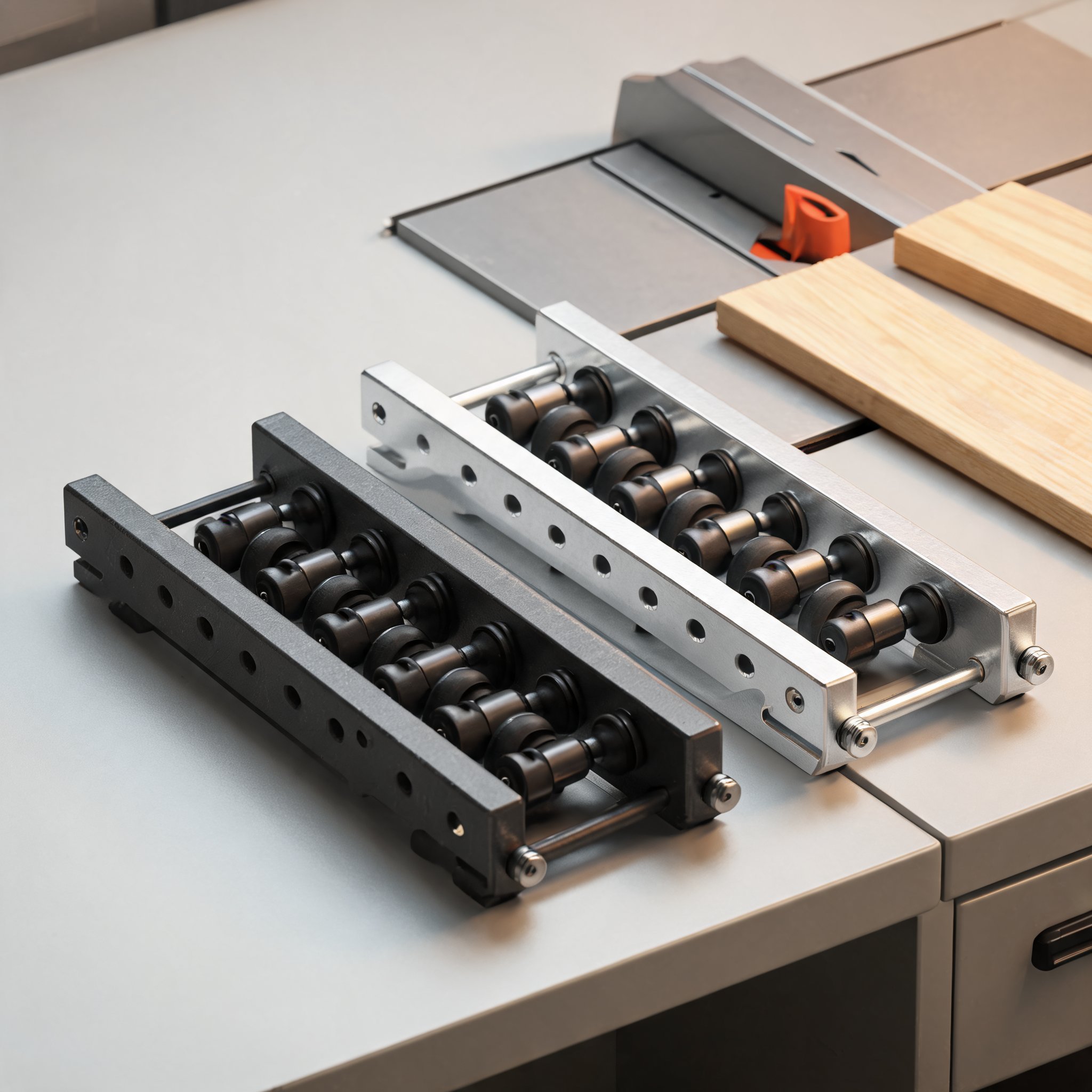
SawStop has apparently introduced a new line of table saw accessories, including WorkTrack Guides designed to act like rolling featherboards. The launch has drawn attention less for the accessory category than for its resemblance to JessEm's Clear-Cut table saw guides.
Commentary on the launch places the author among those who believe the SawStop product looks like a copy of the JessEm design. The observation is presented as a visual and product comparison, not as a legal finding. The commentary stops short of a legal conclusion.
Design similarity and sourcing
Tool brands are often inspired by one another's designs, the commentary notes, but it argues that the parallel is particularly awkward for SawStop given its history of infringement lawsuits. Even if no infringement occurred, the piece says, the similarity is not a good look for the company.
Sourcing adds another point of contrast. SawStop's table saw work guides are said to be made in China, while JessEm says its guides are made in Canada. The commentary does not quantify price, performance or sales differences.
Broader changes at SawStop
The article also flags other recent moves by SawStop, including shutting down its table saw business in Europe and offering table saws in a Black Friday promotion. It says it is too soon to determine whether those changes are connected or what is driving them.
It is also unclear how long the WorkTrack accessories have been available. According to the commentary, SawStop no longer sends press releases, and the writer stopped following the brand on social media after encountering graphic images of hand injuries. The comparison therefore remains an early product-market observation rather than a resolved dispute.